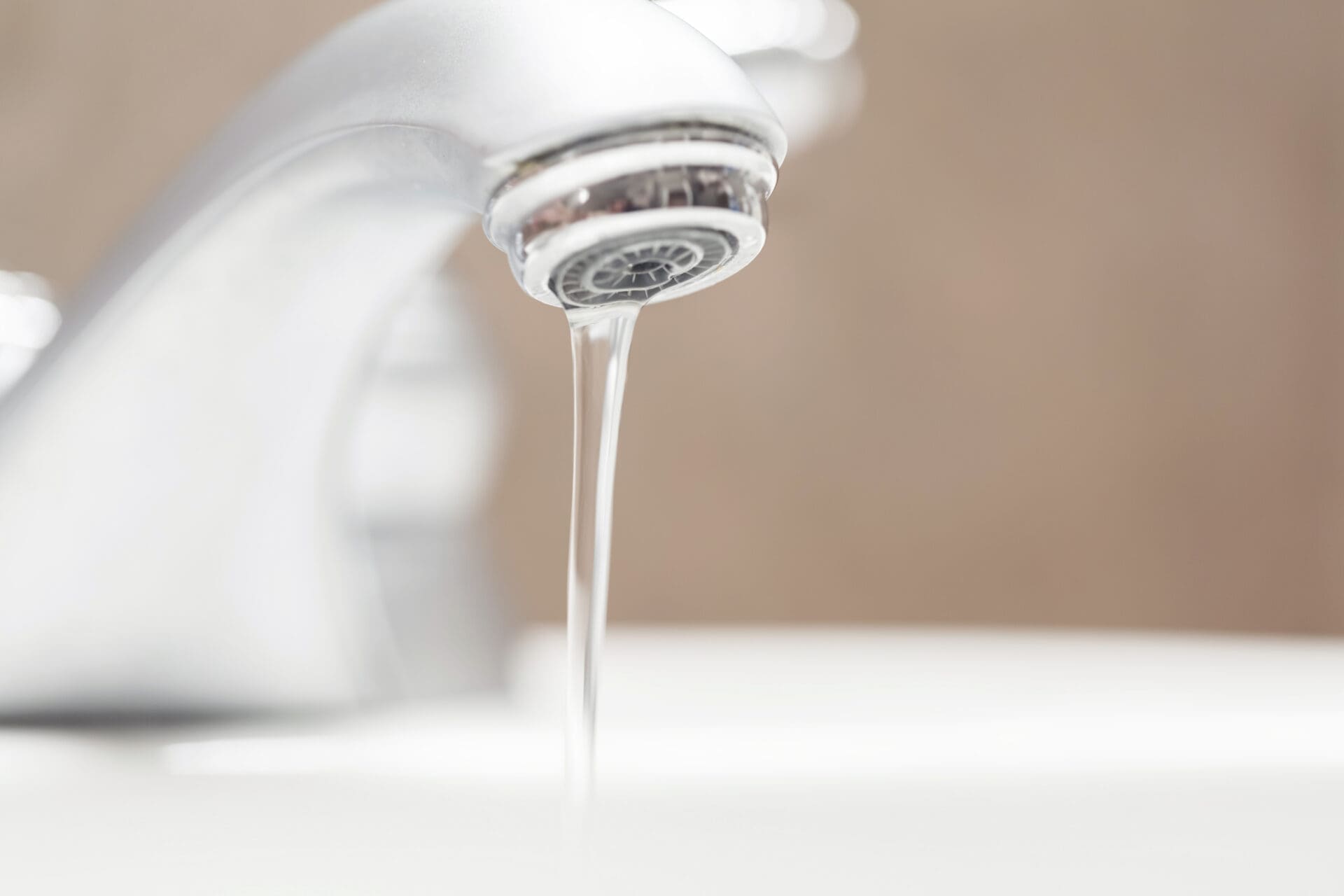
A leaking faucet may seem like a minor inconvenience, but in a commercial environment, that slow drip can spiral into high water bills, structural damage, or worse. Ignoring leaks in your commercial spaces can lead to issues like:
- Wasted water and increased utility costs
- Damage to cabinetry, countertops, and flooring
- Mold growth and musty odors near fixtures
- Tenant or client complaints about poor facility upkeep
- Potential violations of building or plumbing codes
So what causes a leaky faucet in the first place? Let’s walk through the most common issues commercial property owners should look out for and what they can do to prevent them.
Table of Contents
Common Causes of Leaky Faucets
Leaks don’t happen overnight; they usually result from long-term wear, water quality issues, or poor installation. Below are the most frequent reasons faucets start dripping in commercial spaces:
Worn-Out Washers
Over time, rubber or silicone washers inside your faucet wear down due to repeated friction. In commercial restrooms or breakrooms with constant use, these washers degrade faster, leading to leaks near the spout or base.
Damaged or Misaligned O-Rings
O-rings help seal parts of cartridge and disc faucets, especially near the handle. When these rings become misaligned or deteriorate, water can seep out even when the tap is off. This is particularly common in facilities with touchless or push-handle faucets.
Corroded Valve Seats
Valve seats connect the faucet and spout. Hard water or mineral-rich supply lines can corrode this area, especially when maintenance is infrequent, resulting in worsening leaks around the base or spout.
Faulty or Aging Cartridges
Inside cartridge faucets, the cartridge regulates water flow. After years of use—especially in commercial kitchens, janitor sinks, or laboratories—these parts may become stuck, crack, or fail to seal, allowing water to leak even when the faucet is turned off.
High Water Pressure
Excessively high or unregulated water pressure can push water through seals or even break internal components. This is a frequent issue in buildings that lack proper pressure regulators or those linked to municipal supplies with fluctuating flow rates.
Loose or Improper Connections
Faucet parts can come loose from vibration, high-volume usage, or improper installation. Nuts, seals, and gaskets may shift or wear out, especially in high-use environments where commercial-grade fixtures are pushed to their limit.
Sediment and Debris Buildup
Mineral deposits or grit from aging pipes can clog faucet internals, damaging seals or eroding surfaces. Without regular faucet maintenance or water treatment, this buildup can lead to internal leaks or reduced water efficiency.
Inferior or Aged Fixtures
Older fixtures—or those made with low-quality materials—are more prone to leaks, corrosion, and part failure. In high-traffic buildings, low-grade faucets simply can’t keep up with the demand.
Thermal Expansion and Stress
Frequent hot water usage in healthcare, hospitality, or foodservice settings can cause thermal expansion in faucet materials. Over time, this repeated stress warps seals, loosens fittings, and causes premature wear.
Signs Your Commercial Faucet May Be Leaking (Even If It’s Not Obvious)
Now that we’ve covered what causes a leaky faucet, we can look at the signs. The reality is that not all faucet leaks are easy to spot. In many commercial properties, subtle signs go unnoticed until the damage is already a problem, making prompt action extremely important.
Here are some key indicators that your faucets might be leaking, even if water isn’t visibly dripping.
Unexplained Spikes in Water Bills
A sudden increase in your utility bill may indicate undetected leaks. Even a slow drip can waste hundreds of gallons per month, inflating costs across multiple units or shared facilities.
Musty Odors or Mold Around Sink Areas
If you notice persistent odors near sinks or cabinetry, leaking faucets may be to blame. Moisture creates a breeding ground for mold and mildew, which thrive in dark, damp environments like cabinets or wall voids.
Water Stains Under Cabinetry
Discoloration, bubbling, or peeling under sink cabinets could indicate long-term leakage. These stains often point to slow drips that have seeped into porous surfaces over time.
Low Water Pressure
If a faucet isn’t delivering full flow—even when fully open—it may be due to internal damage or buildup caused by leaking components. Leaks can reduce pressure and impact fixture performance across the system.
Dripping Sounds When Taps Are Off
One of the most overlooked signs is the quiet, rhythmic sound of dripping when no one’s using the faucet. This can signal a slow leak from inside the handle or spout area.
Seeing These Signs?
Dripping sounds, water stains, rising bills—don’t ignore the warning signs.
Common Commercial Faucet Types and Their Vulnerabilities
Different types of commercial faucets come with unique leak risks. Understanding how each design works and where they tend to fail can help facility managers make informed maintenance and upgrade decisions.
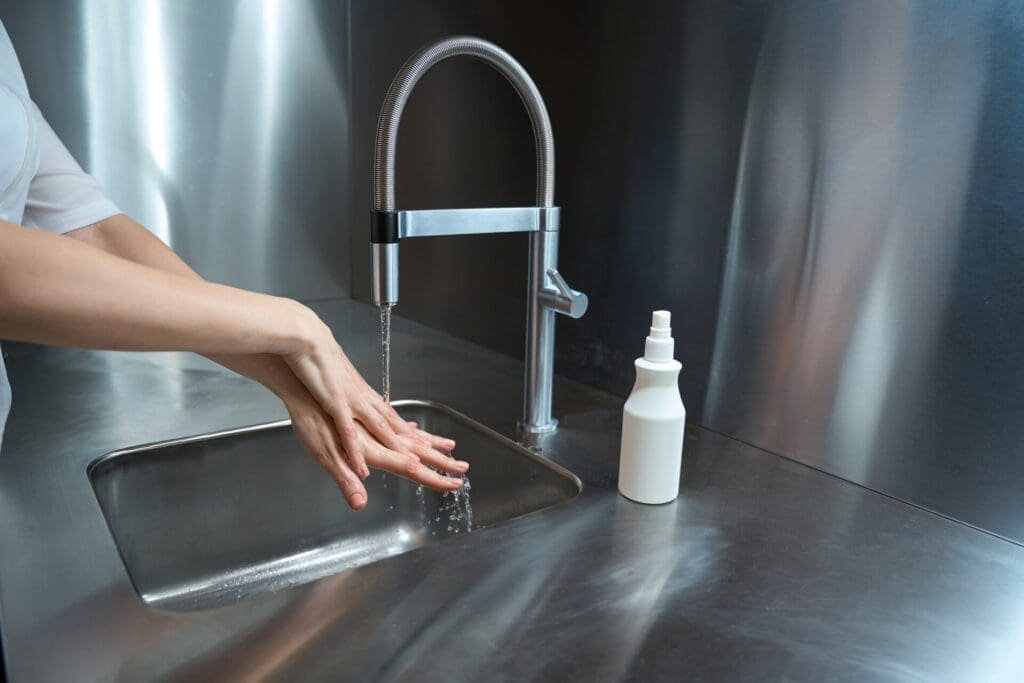
Sensor Faucets
Touchless faucets are popular in public restrooms for their hygiene benefits and water conservation. However, sensor malfunctions or solenoid valve issues can cause water to flow for too long or result in intermittent leaks.
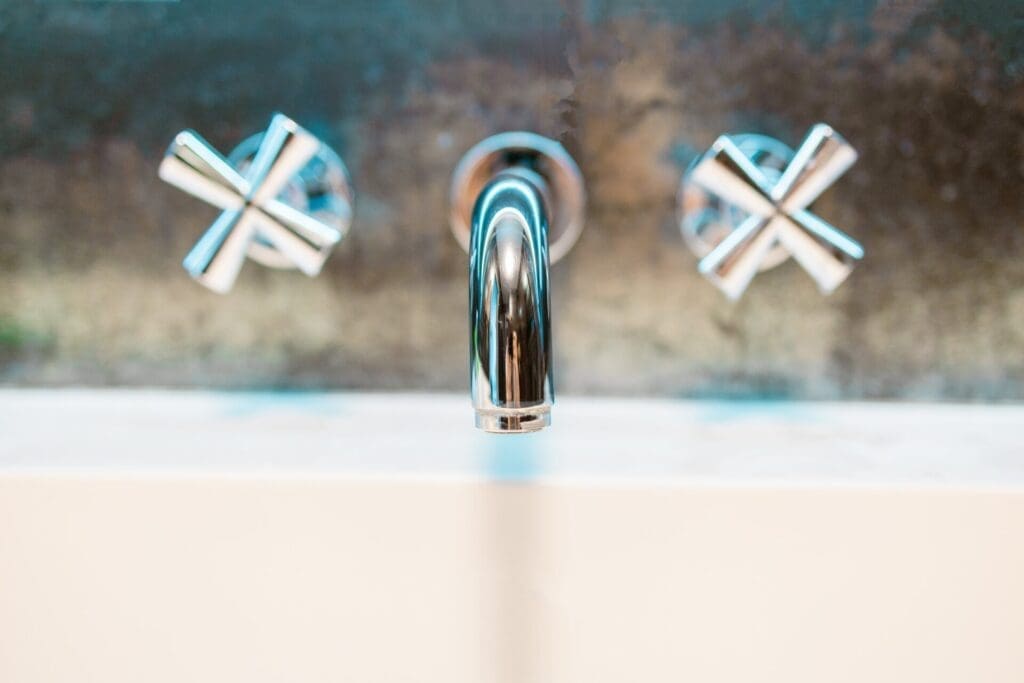
Metering Faucets
These timed faucets are common in schools and gyms. If the internal spring mechanism or seal wears out, the faucet may not shut off completely, resulting in prolonged drips or flow.
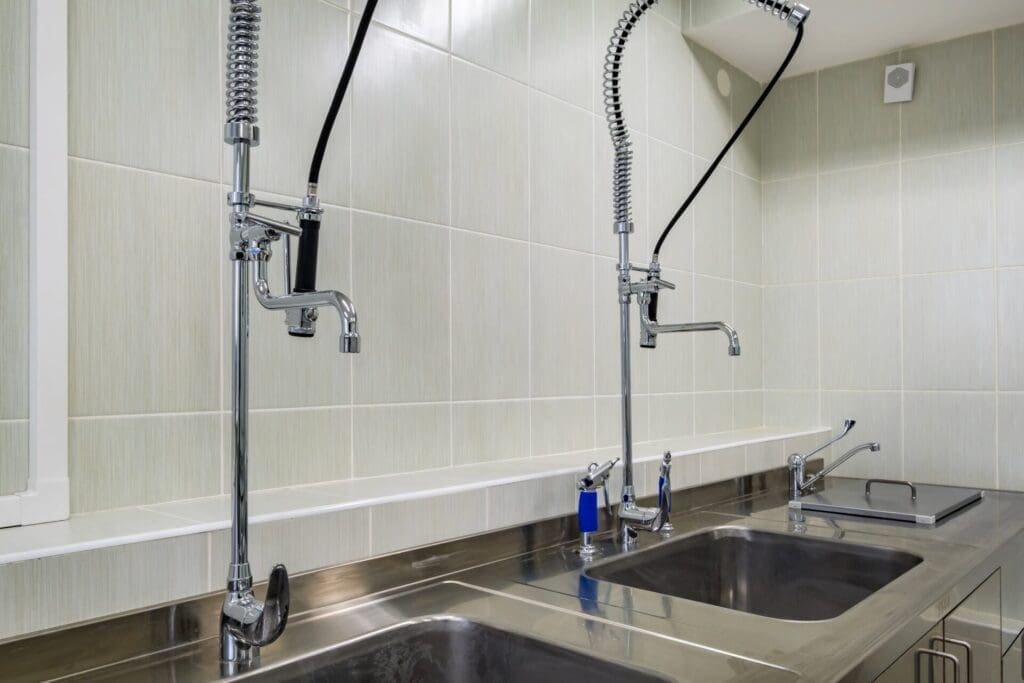
Pre-Rinse Spray Valves (in Kitchens)
Used in commercial kitchens for dish rinsing, these high-use fixtures are prone to hose fatigue, handle wear, and valve leaks. Repeated flexing causes parts to fail over time. Incorporate kitchen faucet tips to help alleviate some of these issues.
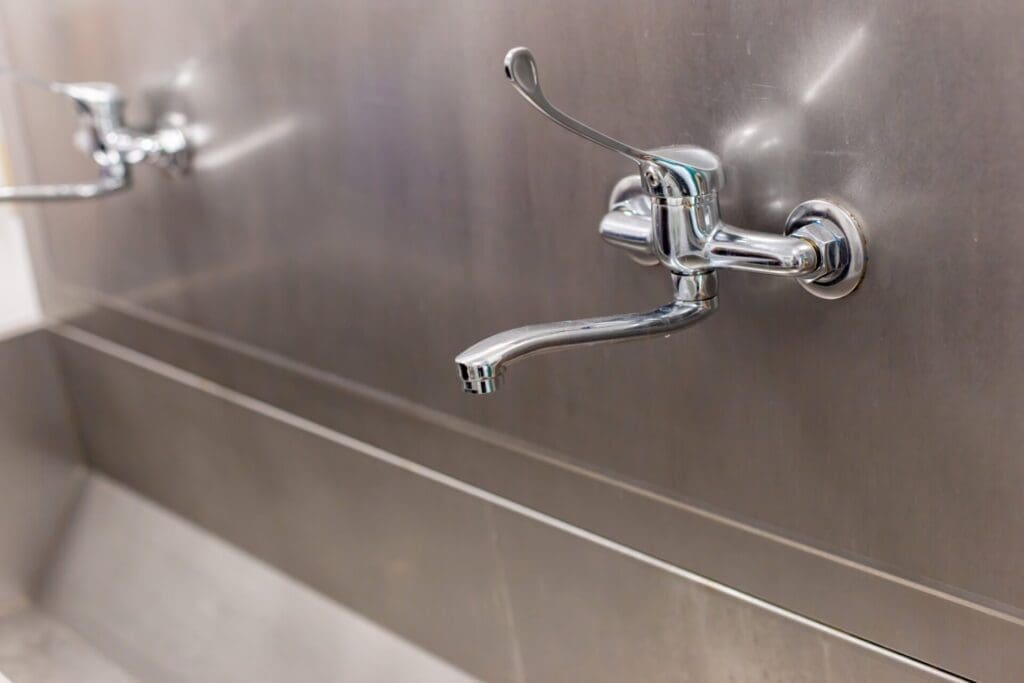
Wall-Mounted Faucets
Mounted into backsplashes or walls, these fixtures can develop hidden leaks that spread inside drywall or tile. They often require specialized service tools and techniques to inspect and repair.
Why Faucet Leaks Are Costlier in Commercial Settings
A leaking faucet in a commercial building doesn’t just waste water; it threatens the integrity of your property, your budget, and your reputation. Here’s why even a small leak can have serious consequences in a business setting:
Water Waste = High Operational Costs
Even a slow drip can waste thousands of gallons annually. Multiply that across dozens of units or high-use restrooms, and your utility bills can spike, cutting into operating margins.
Property Damage Leads to Repair and Liability Costs
Leaking faucets can saturate cabinetry, walls, or flooring. Left unchecked, the resulting water damage can require major repairs and expose your business to liability claims if tenant or client property is affected.
Negative Tenant or Customer Experience
Dripping fixtures make facilities seem neglected or poorly maintained. In hospitality, retail, or healthcare settings, this erodes trust and can negatively impact reviews or tenant retention.
Health and Safety Risks (Mold, Slip Hazards)
Moisture from leaks can lead to mold growth, posing a significant health hazard, particularly in food service and medical facilities. Pooled water also creates slip risks for employees and customers.
Regulatory Non-Compliance in Some Industries
Leaky faucets may violate local building codes or sanitation standards. For regulated industries such as healthcare, food service, or manufacturing, even minor plumbing issues can result in fines or shutdowns.
Repair vs. Replacement: What’s Right for Your Business?
When dealing with a leaky faucet, one of the most important decisions is whether to repair the fixture or replace it entirely. Here’s how to decide:
In general, repairs are ideal when:
- The faucet is high quality, and parts are available
- The issue is isolated to a single component (washer, O-ring, etc.)
- There’s no visible corrosion or structural damage
Replacement may be the better option when:
- The fixture is outdated or made from low-grade materials
- Leaks are recurring even after repairs
- You want to upgrade to a more efficient or sensor-based model
For help deciding, it’s best to consult a licensed plumber. At Andrew’s, we provide professional evaluations and fair quotes based on our findings.
Stop Leaky Faucets Now!
Preventive Maintenance Tips for Commercial Faucets
The best way to avoid faucet leaks and their costly consequences is through proactive care. Here are some quick tips to keep your plumbing system in top shape:
- Schedule routine inspections and fixture audits. Have a professional plumber inspect all fixtures and valves on a recurring schedule.
- Install pressure regulators and water softeners where appropriate. These devices help prevent stress on seals and buildup from mineral deposits.
- Use only commercial-grade fixtures and parts Invest in quality hardware designed to withstand heavy daily use.
- Train staff to report leaks promptly. Encourage employees to flag unusual sounds, drips, or drops in pressure immediately.
- Keep a faucet maintenance log for plumbing-related issues. Tracking problems over time helps identify patterns and prioritize upgrades.
Take Control of Faucet Leaks Before They Drain Your Budget
A leaking faucet in a commercial space is more than a nuisance—it’s a red flag. If left unchecked, it can drive up your costs, damage your property, and disrupt your business. But with routine plumbing inspections, timely repairs, and high-quality fixtures, you can stay ahead of the problem.
Now that you’ve gained valuable insight into what causes a leaky faucet, it’s time to gain valuable peace of mind. Request service with Andrew’s today. Through routine faucet maintenance, we’ll help you catch issues early, avoid major damage, and keep your operation running smoothly.